Posts

Showing posts with the label medical devices

Lab Automation Market is Modernizing Scientific Research

Image
Lab Automation Market Lab automation involves the integration of robotics, information technology, and laboratory instruments and equipments to perform scientific experiments and analysis. It is used in a variety of domains including genomics, diagnostics, analytical chemistry and clinical and life science research. Lab automation solutions help streamline workflows, minimize errors, improve reproducibility and lower operational costs as compared to manual methods. The global lab automation market is estimated to be valued at US$ 5660.68 Mn in 2024 and is expected to exhibit a CAGR of 4.9% over the forecast period 2024 to 2031. Key Takeaways Key players: Key players operating in the lab automation market are Thermo Fisher Scientific, Danaher, Agilent Technologies, F. Hoffmann La Roche, PerkinElmer, Tecan Group,QIAGEN, bioMérieux, Hamilton Company, Anton Paar. Growing demand: Increasing research activities in pharma and biotech industries, shortage of skilled labor and emphasis on optim...
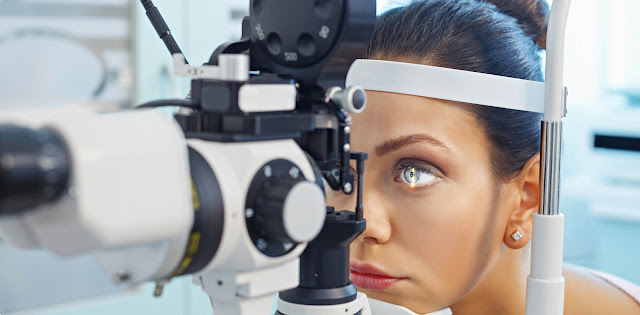
Ophthalmology PACS: Streamlining Workflows and Improving Patient Care

Image
Ophthalmology PACS An ophthalmology picture archiving and communication system, commonly referred to as an ophthalmology PACS, is a digital system designed specifically for ophthalmology practices and clinics. Ophthalmology PACS systems serve to store, view, distribute and access all types of ophthalmic patient imaging and data. Benefits of Ophthalmology PACS One of the main benefits of implementing an ophthalmology PACS is increased efficiency. By converting paper medical records and film-based images to a digital format, clinicians can easily access patient information from any computer workstation. This streamlines workflows and eliminates time spent searching for hard copy files. Documentation is also faster as images, notes and prior exams are just a click away. Productivity is improved as clinicians no longer have to waste time printing, sorting and filing films. Multiple providers can view the same studies simultaneously. Secure remote access allows clinicians to continue workin...

Bioprocess Containers: Ensuring Safety in Biopharmaceutical Manufacturing

Image
Bioprocess Containers Bioprocess Containers: Levels of Containment Containment levels are classified based on the risk posed by the microorganisms being handled. The four containment levels established by the Centers for Disease Control and Prevention (CDC) are: Bioprocess Containers: Biosafety Level 1 (BSL-1) BSL-1 is suitable for work involving well-characterized agents that do not cause disease in healthy humans. Basic laboratory scale and industrial equipment are used at this level. Precautions include gloves and proper equipment decontamination. Organisms handled at this level include non-pathogenic staphylococci and corynebacterium. Biosafety Level 2 (BSL-2) BSL-2 is similar to BSL-1 but is used for agents that pose moderate hazards to personnel and the environment. Minimizing or eliminating exposure is a key goal. Worksurfaces are dedicated to the project and are decontaminated after use. Environmental controls focus on engineering and work practice controls rather than primary ...

Medical Billing Outsourcing: Helping Healthcare Providers Focus on Patient Care In Industry

Image
Medical Billing Outsourcing Medical billing is a complex process that involves accurately collecting and processing insurance claims, following up on denied claims, handling reimbursements and payments, and dealing with millions of rules and regulations set by public and private insurance plans. For most healthcare providers, keeping up with the ever-changing compliance requirements and daily operations of the billing department can be a major administrative burden that takes time and focus away from patient care. This is where medical billing outsourcing can help. Outsourcing the billing process to specialized third-party companies allows providers to delegate this non-clinical task while maintaining compliance and cash flow. Experienced medical billing firms handle all the intricacies of insurance submission and follow up so clinicians can spend more quality time with patients. Removing medical billing stress gives providers bandwidth to improve other areas like expanding services, u...

Artificial Kidney: A New Hope for Patients with Kidney Failure

Image
The kidneys are two bean-shaped organs located near the middle of the back. They perform several vital functions such as filtering waste and excess fluid from the blood and regulating important minerals like potassium, calcium and phosphorus. They also produce hormones to control blood pressure and make red blood cells. When the kidneys fail, also known as end-stage renal disease (ESRD), many of these functions are compromised. According to National Kidney Foundation, over 790,000 Americans have kidney failure and need dialysis or a kidney transplant to survive. Causes and Symptoms of Kidney Failure Kidney failure can result due to various causes like diabetes, high blood pressure, glomerulonephritis (inflammation of glomeruli), polycystic kidney disease and toxic drugs/chemicals. Common symptoms include fatigue, nausea, loss of appetite, swollen feet/ankles and shortness of breath. Patients may also experience itchy skin, trouble concentrating and urine output changes. As kidneys fail...

A Clear Vision: The History and Evolution of Contact Lens

Image
Contact Lens Contact lenses have revolutionized the way we see the world, offering a convenient and discreet alternative to eyeglasses.The earliest attempts at contact lenses date back to the 16th century, when Leonardo da Vinci sketched designs for lenses that could be applied directly to the eye. However, these early lenses were not practical and often caused discomfort. The Modern Era of Contact Lenses The development of modern contact lenses began in the 19th century. In 1887, Adolf Eugen Fick introduced the first soft contact lenses made from glass. These early lenses were bulky and difficult to wear, but they paved the way for future advancements. The Advent of Soft Contact Lenses The breakthrough in contact lens technology came in the 1970s with the introduction of soft contact lenses. These lenses were made from hydrophilic materials that allowed oxygen to pass through to the eye, making them more comfortable and easier to wear. Types of Contact Lenses Today, there are various ...

Measuring Protein Concentration: Overview of Common Protein Assay Methods

Image
Protein Assays Proteins play essential roles in virtually every biological process within living organisms. Understanding protein function requires knowledge of concentration and interaction with other biomolecules. For decades, scientists have relied on assays to quantify protein levels and study protein behavior.  Bradford Assay for Rapid Protein Quantification The Bradford assay is one of the simplest and most popular methods for estimating the total protein concentration in a solution. Developed by Marion Bradford in 1976, it exploits the observation that the absorbance maximum for an acidic solution of Coomassie Brilliant Blue G-250 shifts from 465 nm to 595 nm when binding to protein occurs. In the Bradford reaction, proteins induce a shift in the absorbance maximum and a change in the molar absorptivity of the dye. To perform the assay, diluted Bradford reagent is added to protein samples and standards of a known BSA concentration. After brief incubation, the absorbance at 5...

A Safety Net for the Veins: Understanding Inferior Vena Cava Filters

Image
Inferior Vena Cava Filters The human body is a complex network of blood vessels, each playing a vital role in transporting blood throughout the system. The inferior vena cava (IVC) is a large vein that carries blood from the lower body back to the heart. In certain medical conditions, a blood clot can form in the IVC or its tributaries, posing a serious risk of pulmonary embolism. To prevent this complication, a medical device known as an IVC filter can be implanted. What is an IVC Filter? An IVC filter is a small, metal device that is placed in the inferior vena cava, a large vein in the abdomen. The filter acts as a barrier, trapping blood clots and preventing them from traveling to the lungs, where they can cause a pulmonary embolism. This condition can be life-threatening, leading to symptoms like shortness of breath, chest pain, and coughing up blood. When is an IVC Filter Necessary? Inferior Vena Cava (IVC) Filter   are typically recommended for patients who: Have a high risk...