Posts

Showing posts with the label semiconductors

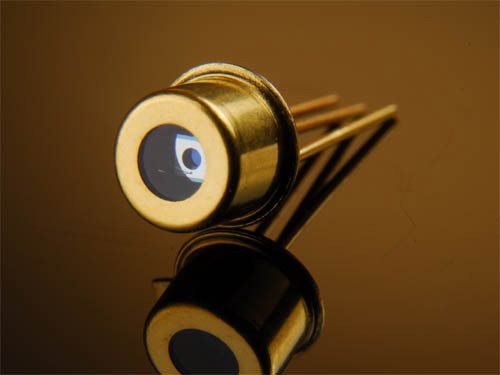
IngaAs Photo Diode Sensor Market Primed for Strong Growth due to Rising Demand for Optoelectronic Devices
Image
Ingaas Photo Diode Sensor Market The IngaAs photo diode sensor market has experienced significant growth in recent years attributed to increasing applications of optoelectronic devices across various industries such as healthcare, consumer electronics, automotive, and telecommunications. InGaAs photo diode sensors are highly sensitive detectors that offer advantages such as faster response times and better signal-to-noise ratio compared to conventional silicon photo diodes. They find wide usage in applications like optical communication systems, laser rangefinders, infrared spectroscopy, spectrophotometers, industrial inspection equipment, and biometric devices.   The global InGaAs photo diode sensor market is estimated to be valued at US$ 243.91 million in 2024 and is expected to exhibit a CAGR of 7.3% over the forecast period from 2024 to 2031.   Key Takeaways Key players operating in the IngaAs photo diode sensor market are First Sensor, Hamamatsu Photonics K.K., Laser Comp...

Intraosseous Infusion Devices - A Safe and Effective Option for Fluid and Drug Administration in Emergency Situations

Image
Intraosseous Infusion Devices Intraosseous infusion, also called bone marrow infusion, is a medical procedure that involves inserting a small needle or catheter into the marrow space of bones to provide vascular access for fluid administration or drug delivery. It offers a fast and safe approach to deliver medications or fluids into a patient's circulatory system when intravenous access is not feasible or has failed. The most common sites for intraosseous infusion are the sternum, knee, tibia and humerus. Advantages of Intraosseous Infusion One of the major advantages of intraosseous infusion is that it provides vascular access within minutes without much difficulty even for those with little or no medical training. This makes it ideal for emergency situations where rapid access to the circulatory system is required for critical care but traditional intravenous access cannot be obtained. Some other key advantages are: - It has a 90% success rate compared to 60% with peripheral intr...

Refurbished Electronics: A Cost-Effective and Environment-Friendly Option

Image
Refurbished Electronics The electronics industry has seen tremendous growth over the past decade. With rapid technological advancements leading to frequent new product launches, consumers are constantly upgrading their devices. This has led to a massive increase in electronic waste. It is estimated that over 50 million metric tonnes of e-waste is generated globally each year. Selling refurbished electronics provides an effective solution to divert waste from landfills and make quality devices accessible at affordable prices. Rise of Refurbished Product Segment Major electronics brands and independent refurbishers have recognized the opportunity in refurbished devices. They thoroughly inspect returned or used products, perform necessary repairs and upgrades, and test them to ensure like-new performance before reselling. This has led to the rise of a profitable secondary market segment for refurbished smartphones, laptops, tablets, gaming consoles and other gadgets. Refurbished products ...

Beyond the Button: A Global Swipe Sensor into the Era of Sensor-Driven Interactions

Image
Swipe Sensor The way we interact with technology has undergone a dramatic shift. From clunky keyboards to touchscreens, interfaces have become more intuitive and user-friendly. Now, a new wave of innovation is taking hold – the rise of global swipe sensors. A World in Motion: The Rise of Swipe Sensors Swipe sensors are a type of touchless technology that detects swiping gestures across a designated surface. This intuitive approach eliminates the need for physical buttons, creating a cleaner and more streamlined user experience. The global adoption of Swipe Sensors can be attributed to several factors: Enhanced User Experience: Swipe gestures are often more natural and intuitive than pressing buttons, making interactions faster and more efficient. Improved Hygiene: Touchless interfaces are particularly beneficial in settings where hygiene is a priority, such as hospitals and food preparation areas. Increased Durability: Swipe sensors are typically more resistant to wear and tear com...

Building the Future: Bricklaying Robots Revolutionize Construction

Image
  Bricklaying Robot For millennia, the image of a skilled bricklayer, meticulously laying brick after brick, has been synonymous with construction. However, the industry is on the cusp of a transformation, with bricklaying robots emerging as a game-changer. These innovative machines promise to revolutionize construction by enhancing efficiency, safety, and sustainability. From Tradition to Transformation: Traditional bricklaying, while a time-tested craft, faces limitations. Skilled labor shortages, physically demanding work, and repetitive strain injuries are constant challenges. Bricklaying robots offer a solution by automating this crucial task. These machines, equipped with advanced sensors and robotic arms, can precisely lay bricks at a significantly faster rate than human workers. The Rise of the Machines: Efficiency and Beyond The benefits of bricklaying robots extend far beyond just speed. Here's a glimpse into their potential: Enhanced Efficiency:   Bricklaying Robot ...

Efficiency in Every Layer: Examining the Impact of Global Bricklaying Robots on Construction

Image
Bricklaying Robot In the dynamic world of construction, technological innovations continue to reshape traditional practices, offering solutions that enhance efficiency, productivity, and safety. Among these advancements, the emergence of bricklaying robots has revolutionized the way buildings are erected, challenging conventional methods and paving the way for a new era of construction automation. Enhancing Productivity: Bricklaying robots represent a significant leap forward in construction automation, offering unparalleled speed and precision in laying bricks. These robotic systems are equipped with advanced sensors, actuators, and control algorithms that enable them to accurately position bricks with minimal human intervention. By automating repetitive and labor-intensive tasks, bricklaying robots significantly reduce construction timelines and labor costs while enhancing overall productivity. Improving Quality: Beyond speed and efficiency, Bricklaying Robots contribute to improved...

Lead Acid Battery: A Reliable Energy Storage Solution for Many Industries

Image
Lead Acid Battery A lead acid battery works on a simple principle of reversible lead reactions. It consists of lead plates submerged in an electrolyte of diluted sulfuric acid. During charging, lead sulfate on the plates is converted to lead and lead dioxide. The sulfate ions dissolve in the electrolyte. During discharging, the reverse reaction takes place with lead and lead dioxide converting back to lead sulfate and releasing electrons. This movement of electrons between the plates through an external circuit is what produces electricity. Usage in Industries Due to their reliable performance, rechargeable battery find widespread use across many industries for power backup and energy storage applications. They serve as the energy storage of choice for motor vehicles, telecom towers, solar home systems, and large industrial plants. Their tolerance for abuse and deep discharge cycles make them suitable even for off-grid renewable energy integration. Some key industrial usages are: A...

Lead Acid Battery: A Technology Powering Businesses for Over 150 Years

Image
Lead Acid Batteries The lead acid battery was invented in 1859 by French physicist Gaston Planté and is widely considered one of the most important inventions in the industrial revolution. While working as a scientist at the Sorbonne University in Paris, Planté discovered that when lead and lead dioxide plates are immersed in sulfuric acid and connected by a wire, they can provide a steady current of electricity. This chemistry allows the lead acid battery to be recharged through the reversal of the chemical reactions that occur during discharge. Planté's invention marked the beginning of practical and affordable battery technology as the first truly secondary or rechargeable battery. Chemistry and Mechanisms of Lead Acid Batteries The key components and chemistry that make Lead Acid Batteries work include lead plates or electrodes, lead dioxide plates, and sulfuric acid electrolyte. During discharge, the sulfuric acid allows electrons to flow from the lead plate which oxidizes to...

The Versatile Secondary Battery

Image
Secondary Battery Batteries play a vital role in our daily lives by powering a wide range of devices from smartphones to electric vehicles. While primary batteries are designed to be disposable after one use, secondary batteries have the unique ability to be recharged and used multiple times. These rechargeable batteries, commonly known as secondary batteries, have becoming increasingly important with the rise of portable electronics and electrified transportation. Lithium-ion Batteries: The Workhorse of Portable Electronics The lithium-ion battery is undoubtedly the most widely used secondary battery today. With their high energy density and no memory effect, lithium-ion batteries have become the defacto choice for powering consumer electronics such as smartphones, laptops, tablets, and more. Their popularity stems from lithium's lightweight nature combined with high electrochemical potential that allows lithium-ion cells to store more energy in a smaller physical size. This enabl...

The Revolutionary Role of Sensor in Our Modern World

Image
Sensor Sensors have become an indispensable part of our lives in the modern technological era. From assisting drivers on the road to enabling medical innovations, these tiny devices are revolutionizing numerous industries through continuous advancements. Let's explore some of the major ways sensors are transforming our world. An Invisible but Important Part of Our Devices Sensors are small electronic components that detect changes in the physical environment and convert that input into an electronic signal. They play a crucial but often invisible role in almost all electronic devices we use daily. Our smartphones rely on numerous types of sensors like touch sensors, motion sensors, light sensors and more to provide seamless user experiences. Advanced driver assistance systems in vehicles utilize sensors like radars, LIDARs and cameras to assist drivers. Home appliances are integrating various sensors for "smart" functionality. Industrial automation too heavily leverages s...

Semiconductor Equipment: Enabling Technology Behind Modern Electronics

Image
Semiconductor Equipment The semiconductor industry plays a vital role in powering our increasingly digital world. From smartphones to laptops, medical devices to autonomous vehicles, semiconductors are at the heart of nearly every piece of technology we interact with on a daily basis. However, behind every semiconductor chip lies a sophisticated ecosystem of specialized semiconductor equipment that enables the manufacturing of these tiny yet powerful integrated circuits.  Wafer Fabrication Equipment The fabrication of semiconductor wafers is a complex multi-step process where layers of material are sequentially deposited and patterned on silicon wafers using highly precise wafer fabrication equipment. Some of the basic steps involved include photolithography, deposition, etching, doping and cleaning. Photolithography machines are used to transfer the circuit pattern onto photosensitive resists coated on the wafer. Deposition equipment such as physical vapor deposition (PVD) and che...